Proof-of-work
CryptoTiny
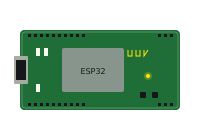
128 KB scratchpad · 512 sequential AES-128 rounds · Keccak-256. No floating point, no 64-bit multiply — built for the Xtensa core in an ESP32.
Base
Monero v0.18.3.4
RingCT, ring signatures, stealth addresses, Bulletproofs+ and view tags — active from block 1. Only the PoW is new.
Block time
120 s
Two-minute blocks, difficulty retargeting every block.
Units
12 decimals
1 VLT = 1012 atomic units, same precision as Monero.
Emission
0.3 VLT / min tail
Smooth Monero-shape curve with a permanent tail emission, so miners are always paid. No fixed cap.
Mining
Solo or P2Pool
Run a node and mine solo, or join Volta P2Pool — decentralized, no operator, no fee.
Premine
3,518 VLT · developer budget
One genesis allocation funds the domain, infrastructure and development. It is not
hidden: the wallet's view key is published with the launch
release notes, so anyone can scan every output and trace every spend on-chain. No second premine,
no founder unlocks, no ICO.